Crop production is the process of growing and managing plants in order to obtain useful products such as food, animal feed, fiber, and raw materials for industries.
- Teacher: Shadrack Kimutai
- Teacher: Admin User
- Teacher: Richard Yahuma
Marion Ngetich College of Agriculture and Applied Sciences (MNCAAS) is a premier institution dedicated to providing competency-based education and training in agriculture, applied sciences, and technical skills. The college equips learners with practical, entrepreneurial, and digital competencies required to succeed in modern agricultural systems and related industries.
The institution integrates theoretical knowledge with hands-on training across crop production, animal husbandry, aquaculture, apiculture, farm management, and applied sciences.
To provide high-quality, competency-based training in agriculture and applied sciences that empowers learners with practical skills, innovation, and entrepreneurship for sustainable development.
To be a leading center of excellence in agricultural and applied sciences training, research, and innovation in Africa and beyond.
MNCAAS adopts a Competency-Based Education and Training (CBET) approach that emphasizes:
“Skills for Sustainable Agriculture and Innovation”
Crop production is the process of growing and managing plants in order to obtain useful products such as food, animal feed, fiber, and raw materials for industries.
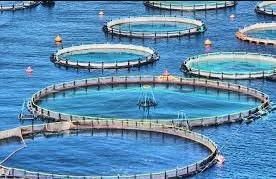
This unit specifies competencies required to carry out fish farming. This involves constructing
fish farming structures, feed fish, managing fish hatcheries and managing fish cages. It also
involves harvesting of fish, processing harvested fish as well as managing re- circulatory
aquaculture systems